
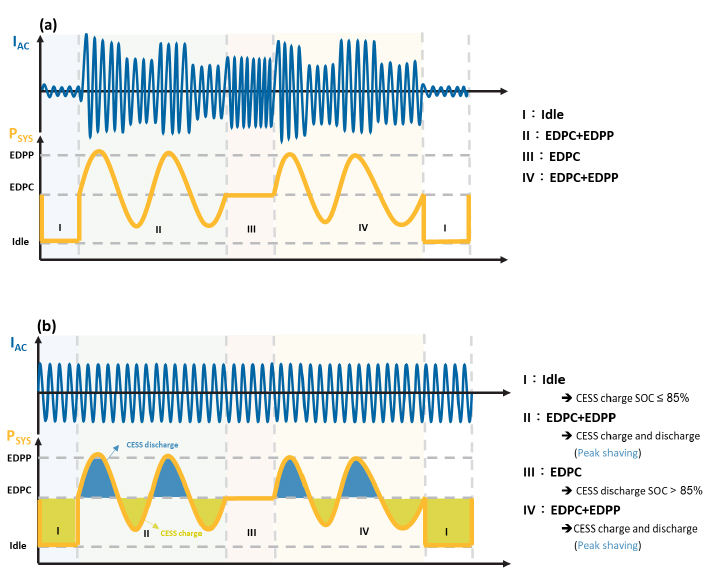
With the rapid expansion of AI application scenarios, the floating-point operations per second (FLOPS) of large language models (LLMs) surpassed 1025 by the end of 2024. The power demand from high-density integrated AI GPUs used in training and inference continues to climb. GPUs instantaneously switching from low to high load can cause peak power surges, often leading to power interruptions. As a result, delivering rapid and stable peak power and preventing interruptions to GPU compute has become a major challenge for data centers. To address this, capacitor energy storage systems (CESS) based on lithium-ion capacitors (LICs) can help reduce the input peak power of AC power supply units (AC PSUs) and improve system reliability. This makes them an important backup power solution [Figure 1].
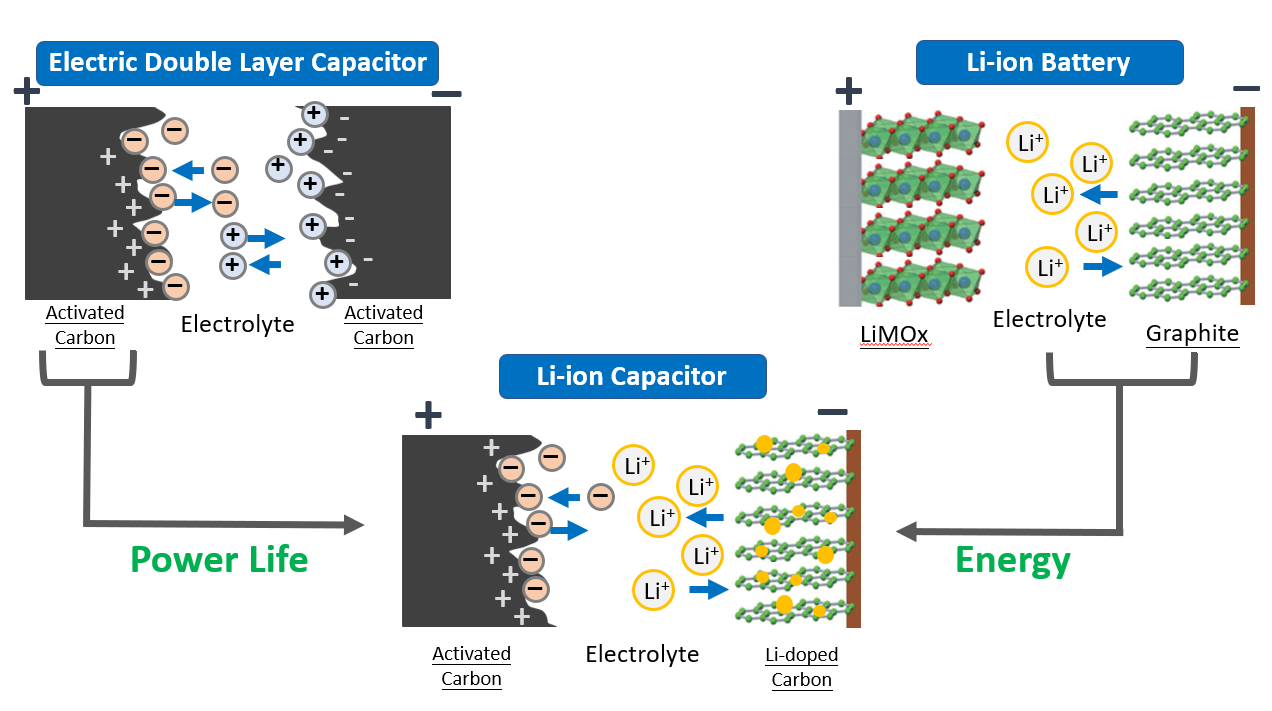
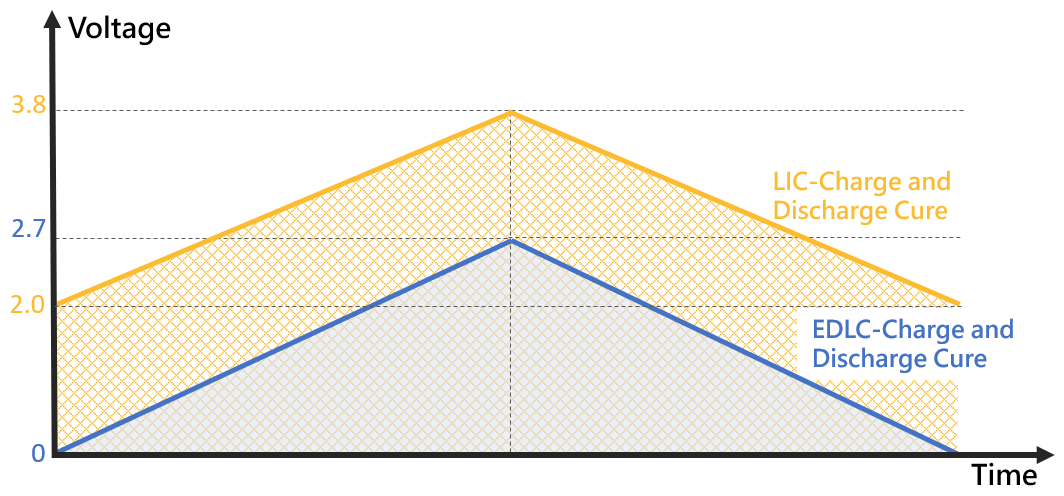
Lithium-ion capacitors (LICs) combine the anode of a lithium-ion battery (LIB) with the cathode of an electric double-layer capacitor (EDLC) (Figure 2), delivering an operating voltage of 2.0V – 3.8V. This provides higher energy density than EDLCs alone (Figure 3) while maintaining high output power, excellent safety, and long cycle life. LICs also overcome the limitations of LIBs in terms of power density, safety, and service life, making them a primary choice for backup power in AI computing centers.
To ensure the quality of power delivery in capacitor energy storage systems, it is essential to control the quality of LICs—especially two key parameters: DC Internal Resistance (DCIR) and capacitance. The main evaluation method for these capacitors follows the IEC 62813 standard, which defines testing procedures for LICs. In practice, users performing these tests often face these challenges:
- To accurately derive ESR results, the calculation formula requires testing equipment capable of capturing values with a 1ms time resolution.
- The test system should include an automatic calculation algorithm that outputs capacitance and DCIR values immediately after testing, improving efficiency and reliability.
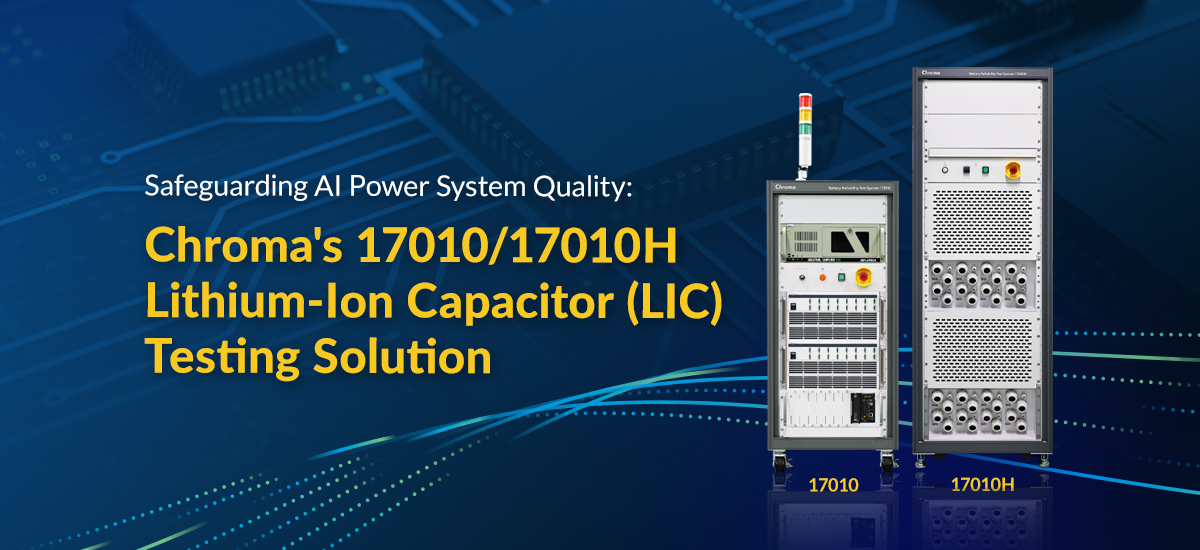
The Chroma 17010/17010H addresses these IEC 62813 testing challenges with the following features:
- During testing, the system measures and controls voltage, time, and current at 1ms resolution, and calculates capacitance and DCIR using accurate voltage and time measurements at 10ms intervals.
- Covers a measurement range from 200μA to 2400A, supporting applications from R&D to mass production. The 17010H also offers an optional 30-second pulse discharge at 4800 A.
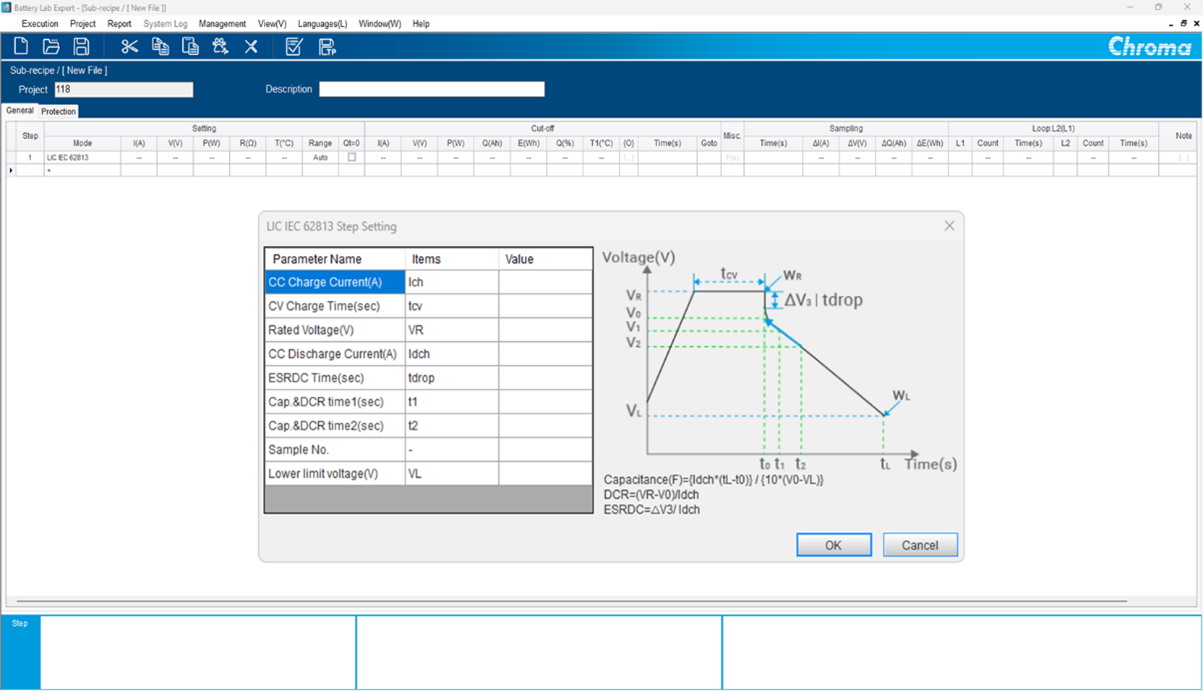
- The Battery LEx software includes dedicated test steps (Figure 4), using a least-squares regression algorithm to complete capacitance and DCIR calculations in a single test.
Reference:
[1] Delta’s Grid-to-Chip Power Solutions for Gigawatt-Scale AI Data Centers